Blockchain Technology basics | Blockchain technology Applications across various sector

Blockchain Technology
Blockchain technology was developed by a pseudonymous programming designer by the name of Satoshi Nakamoto in the year 2008. Blockchain is an distributed framework consists of database that works on an “open ledger” to store and effectively manage transactions.
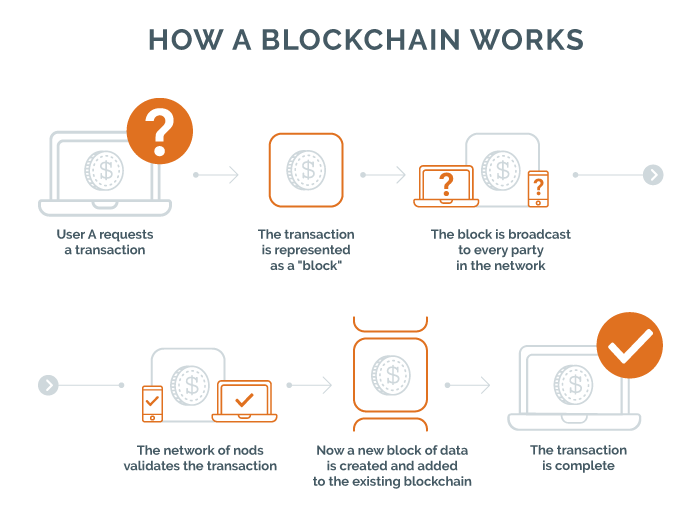
Each record in the database is known as a “Block” and contains details such as “time stamp” while also linked to a previous block, This makes it very difficult or rather impossible for anybody to change data about the records reflectively. Likewise, because of the way that a similar exchange is recorded over numerous, circulated database frameworks, the innovation is secure by design.
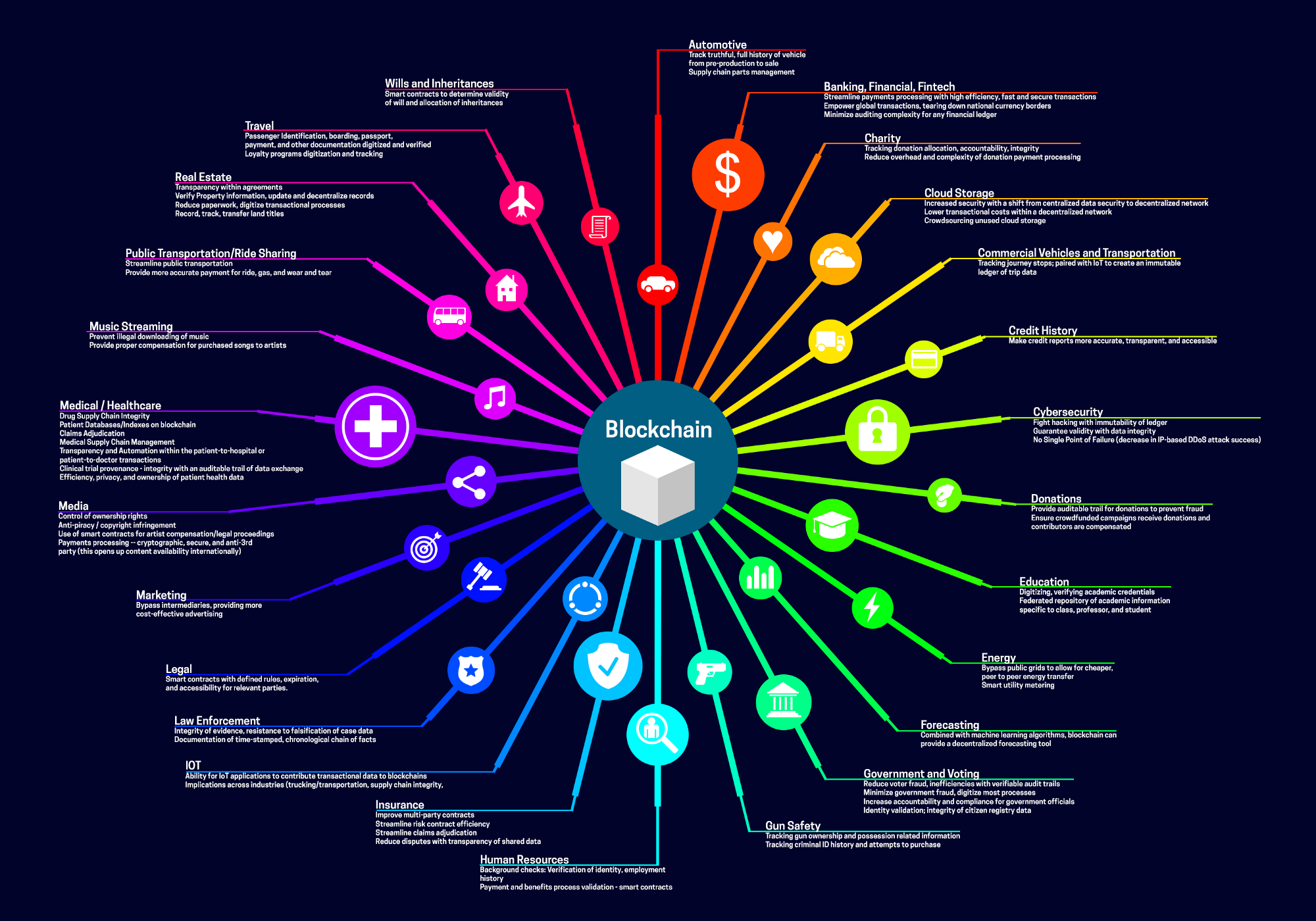
Key blockchain Applications across various sector includes:
- Digital Identity:
Digital security is one of the biggest problems around the world. Blockchain advancements make identification, tracking and managing digital identity secure and proficient, bringing about consistency in transactions while avoiding data thefts.
Be it managing an account, human services, national security, citizenship documentation or internet retailing, authentication and approval is a process essentially woven into business and culture around the world.
Do you remember Target Data breach?
The data breach at Target was essentially more extensive than initially announced: The organisation said that 60 million clients had their data, for example, their name, address, telephone number and email address hacked in the breach.
Examples such as these as well as many other hacked databases and stolen accounts are sparkling the light on the need to identity based security innovations.
Blockchain technology offers answers to some advanced digital identity security issues, where personal can be remarkably authenticated in a secure way. Blockchain based frameworks are based on identity verification using digital signatures which are based on public key cryptography.
In blockchain identity authentication, the main check performed is regardless of whether the transaction was marked by the right private key. The gathered data is analysed for whether the public key belongs to rightful owner or not.
2. Digital voting by blockchain technology
Security is the biggest hurdle to getting electoral processes online. Utilizing the blockchain, a voter could access and check that her or his vote was effectively cast while staying unknown to the rest of the world. In 2014, a political party in Denmark, known as Liberal Alliance turned to be the first organization to implement blockchain to vote.
With American voters have drastically lowered during the course of decades, digital voting can act as a innovative way to attract non- participants to cast their votes.
Let’s hope that Blockchain technologies will be set as a standard across all nations worldwide. This will ensure better transparency towards system and governments
3. Paying Employees
Since the blockchain has it’s foundations in cryptocurrencies, it can be utilised as an application to remunerate employees. It can be an effective cost saver for organisations implementing crypocurrency to pay employees.
A better and effective payment service will be Bit wage, as it saves the expensive charges related with transactions globally, and the time it takes for such transactions to move from bank to bank, installments made by means of Bitcoin can spare both cash and time for managers and workers.
Also, there are payments for remote employees and contractors.. This type of payments happen from time to time and using block chain can help organisations ease their transactions.
4. Maintaining medical records
Medical records can be easily accessed by a decentralised blockchain rather using data base. There could be a lessened danger of unapproved access as the blockchain would contain communication protocol in representing how medical records could be gotten to and by whom.
for instance, an assistant in a GP ( general practitioner) medical procedure may just hold a specified key to access restricted data about a patient, (for example, name and address), while a specialist would have a full key that unlocks all the limited access to all medicinal data.
Medicinal records could likewise give patients full access to their data from the beginning. Patients could then specify inclinations about what treatment they ought to get in for various conditions.
Thus, it would empower patients to record and update their organ transplant inclinations while giving therapeutic experts quick access to these inclinations which would help to avoid from the loss of organs because of the transplant window being missed.
5. Supply Chain
The supply chain has a very important role to play in pharmaceutical industry. The blockchain could be utilized in assigning out each batch of medications with a one of a kind unique electronic serial number, with each bunch being tracked as it travels through a series of transactions and through the different phases of the supply chain,
For instance, from plant to central stockroom, local warehouse, drug store lastly to patient, intermediaries through the supply chain will then have authority to approve and validate the receipt of medications and give updates. By tracking movements in real life, it will be substantially harder for fake medications to enter the production network.
This might be especially gainful in developing nations where it is noted that more than 30% of medications are fakes. It might likewise encourage provoke item reviews in the event of defective meds are being found.
Conclusion:
Block chain applications are endless, even though there are some challenges while implementing blockchain but the positives overweight's the negatives.
Websites courtesy:


Comments
Post a Comment